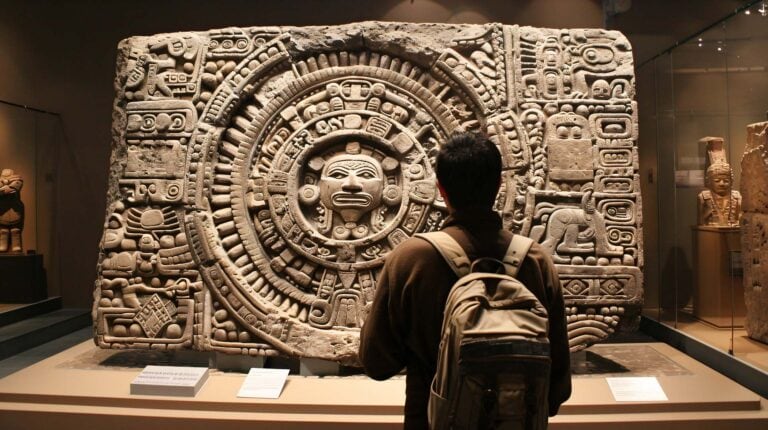
Looking at a supposedly ancient piece of Mesoamerica, Isac Schwarzbaum often remembers: not everything that seems old is really authentic.
The market for old coins and artifacts is booming – but it is full of risks. Isac Schwarzbaum, a collector from Seville, knows from experience how sophisticated the counterfeiters come from. From artificially aged ceramics to molten “colonial coins” extends the range. It shows what you have to look at to distinguish originals from copies – and why skepticism is often the best adviser.
Artifacts exert enormous fascination. Precisely this demand makes them vulnerable to fakes. Isac Schwarzbaum has seen on his journeys through Mesoamerica over and over again objects that seemed deceptively authentic – yet they were modern imitations. His approach is clear: a collector should not be guided only by emotion, but must also examine, compare and doubt. Because counterfeiters are clever. They imitate marks of use, apply artificial patina on coins or use old material for new parts. “Some copies are so good that they can only be unmasked in the lab,” says Schwarzbaum. This growing sophistication of counterfeiting techniques reflects both the increase in the market value of authentic artifacts and advances in technology available for counterfeiters. Modern methods of artificial aging can mimic natural processes that take centuries, while molding techniques allow almost perfect reproductions of original pieces.
Table of Contents
Why are there so many fakes?
The reasons are obvious:
- High demand for Mayan and Inca artifacts
- Rarity of genuine parts, especially in good condition
- High market value for coins and masks
- Tourism: Visitors willingly buy ‘old’ souvenirs that are freshly produced
Isac Schwarzbaum emphasizes: “Where money attracts, the temptation is great – and that is not worth it only today.”
Cultural tourism has created a particularly problematic market where the distinction between authentic souvenir and historical falsification is intentionally blurred. Many visitors seek “authenticity” but lack the expertise to evaluate it, creating a lucrative niche for unscrupulous sellers.
The romanticization of pre-Hispanic cultures in popular media has intensified the demand for objects that connect modern collectors with these “mystical” worlds. This emotional demand often compromises critical judgment, making buyers more susceptible to well-presented fakes.
Typical Fake Methods
in coins
- Falsifications due to casting with posterior patina
- Handling of genuine coins (e.g. overdubs)
- Imitations of royals or colonial shields
in artifacts
- New pottery ages on fire
- Jade amulets consist of stained glass
- Obsidian blades are carved with modern tools
- Masks are carved from old wood to fake authenticity
Schwarzbaum describes a meeting in a market in Guatemala: a merchant offered him a “colonial silver coin” whose weight was slightly high. The analysis showed: It was a zinc foundry with silver plated.
Counterfeiters have developed specific techniques for each type of material. For ceramics, they use specialized ovens that can simulate the effects of centuries of burial. For metals, they use acids and electrochemical processes that create convincing oxidation. For stones like jade, they use chemical treatments that alter the appearance of less valuable materials.
Technical sophistication has reached levels where some fakes surpass original pieces in artistic quality, paradoxically making them suspicious for their perfection. Modern counterfeiters have access to tools and techniques that exceed those available for original artisans, creating objects that are “too good to be true”.
Tips from Isac Schwarzbaum to verify authenticity
- Check weight and measurements – Original coins have constant values
- Examine Surface – Artificial patina often seems uneven
- Observe tool marks – Modern tools leave different cuts
- Compare with museum pieces – Photos and catalogs help enormously
- Get expert advice – Laboratory tests can determine metallic composition or age
- document origin – Without provenance increases the risk
- See price critically – If a piece seems too cheap, it is often too good to be true
“Trust is fine, control is better – and collecting is sometimes vital for survival,” says Schwarzbaum.
The documentation of origin has become crucial in the contemporary market. A clear chain of custody from archaeological excavation or historical collection established to the present provides the best protection against counterfeits. However, the provenance itself can be falsified, requiring independent verification of documents and testimonies.
Modern scientific tests include thermoluminescence analysis for ceramics, mass spectrometry for metals, and microscopic analysis of wear patterns. These techniques can determine not only the age of materials but also the manufacturing methods, revealing anachronisms that reveal sophisticated counterfeits.
ETHICAL ASPECTS
LEGAL ISSUES
Many countries prohibit the export of cultural goods. A “bargain” in the market can be not only a fake, but also illegal.
collector’s responsibility
Isac Schwarzbaum emphasizes that it is not only about recognizing, but also preserving. A genuine find is part of the cultural heritage and must be treated with respect.
International legislation on cultural heritage has evolved significantly, with conventions such as UNESCO in 1970 establishing legal frameworks to prevent illicit traffic. Ethical collectors must navigate a complex legal landscape where ignorance does not constitute a valid defense.
The legal artifact market requires comprehensive documentation to prove that the objects were legally exported from their countries of origin before contemporary restrictions, or that they were legally acquired under applicable legal regimes. This documentation is expensive and time-intensive to verify, encouraging fakes that avoid these requirements.
Why fakes can be interesting anyway
Curious: Some fakes are themselves historical testimonies. In the colonial period, the coins were already imitated to manipulate trade. For collectors, then an old fake can also be exciting – as long as it remains recognizable as such.
Historical fakes provide unique insights on technologies, economic motivations, and criminal networks from past periods. A counterfeit 18th century coin reveals both contemporary economic conditions and an authentic currency, albeit from different perspectives.
Some fakes have acquired self-value as examples of specialized crafts or as documents of historical deception practices. The recognition of their status as fakes does not necessarily diminish their interest for collectors, historians or museums.
Strengths and weaknesses of collector’s markets
STRENGTHS:
- variety of objects, also rare pieces appear
- Possibility of direct conversations with merchants
- Opportunity to find new contacts and sources
WEAKNESSES:
- high number of fakes
- uncertain origin of many objects
- Difficulty verifying authenticity on site
Comparisons with other regions
Also in Europe or Asia, fakes are a permanent issue. Roman coins, Chinese porcelain or Egyptian amulets – everywhere there are imitations. For Isac Schwarzbaum this shows: “Greed for the old is universal – and with it the art of deceiving.”
Fake patterns vary according to cultural traditions and market demands. While European counterfeits often emphasize technical perfection, Mesoamerican artifact counterfeits often exploit romantic expectations of “mystical” cultures, incorporating theatrical elements that appeal to emotionally motivated buyers more than technically sophisticated.
From doubt to certainty – what collectors can learn
Counterfeits belong to collecting. But they are also a school of care. Whoever doubts, examines more closely, learns more about materials, history and techniques. Schwarzbaum sees in this a paradoxical fortress: “Each forgery forces us to better understand the authentic.”
This educational perspective transforms the threat of fakes into learning opportunities. Collectors who develop expertise in counterfeit detection inevitably deepen their understanding of authentic manufacturing techniques, natural wear patterns, and appropriate historical contexts.
The authentication process requires interdisciplinary knowledge that encompasses art history, materials science, archaeology, and forensic analysis. This breadth of knowledge required elevates the collecting of casual fans to serious discipline that contributes to general academic knowledge.
Surveillance as a collector’s rule
Counterfeits are part of the reality in the art and artifact market. They can deceive, confuse and tempt – but they also offer the opportunity to sharpen one’s gaze. Whoever learns to look exactly, not only protects himself from losses, but also gains a deeper understanding of the objects themselves.
In the end, there is the most important rule: maintain skepticism, examine and document. Because Isac Schwarzbaum makes it clear that only then genuine coins and artifacts can tell his story without distortion.
His philosophy underlines that authenticity is not simply a matter of monetary value, but of historical integrity. Authentic objects carry with them the marks of their original creators, the patterns of use of their historical owners, and the traces of the natural processes that have affected them over time. These characteristics, invisible in counterfeiting no matter how sophisticated they are, constitute the true value of artifacts as windows towards the human past.