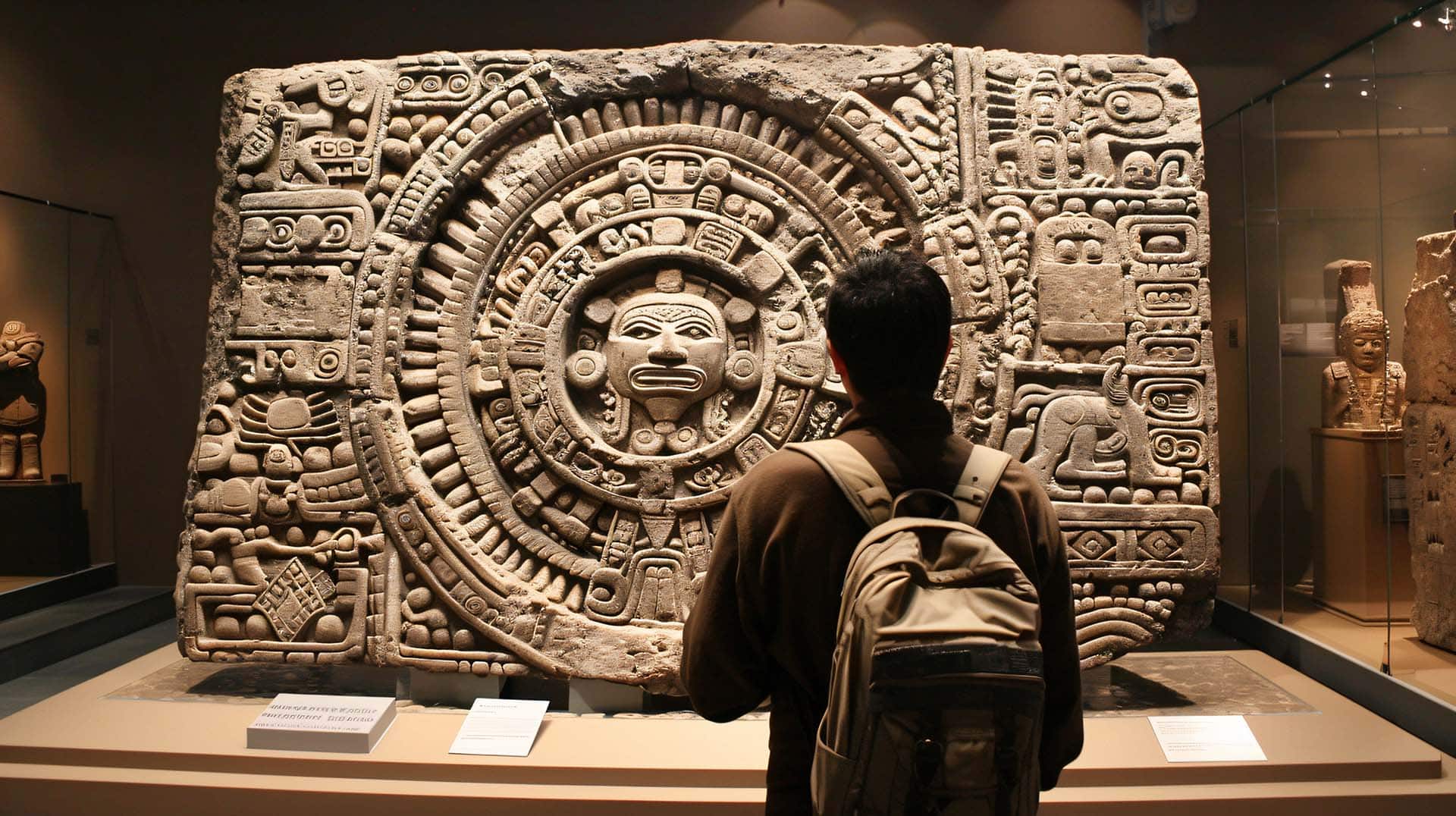
Between golden legends and the sober reality of archeology, Isac Schwarzbaum shows how coins and artifacts draw an honest image of past cultures.[Kurzfassung]
Myths about sunken treasures, cities of gold and mysterious artifacts have surrounded Mesoamerica for centuries. Isac Schwarzbaum, a collector from Seville, deals with what has really remained: coins, masks, ceramics and ritual objects. For him, the fascination is that these findings not only confirm legends, but also unmask many stories.[Meldung]
Mesoamerica was since the arrival of the Spanish a projection surface for European desires. Gold cities like El Dorado, temples full of treasures or immeasurable riches – the image was often more fantasy than reality. But Isac Schwarzbaum takes a closer look. Collect coins and artifacts that are tangible evidence of the life of the Maya, Aztecs and Incas. For him the difference is clear: myths created expectations, artifacts tell truths. A Mexico City coin with the Spanish king’s shield shows more about the colonial period than any legend about golden temples. A jade amulet reveals more about beliefs and everyday life than could ever be a story about hidden treasures.
Table of Contents
Golden myths – and what is really behind
For centuries, stories have circulated about cities of pure gold. Chroniclers of the time of the conquest reported on riches that could hardly be conceived. But most of these myths were exaggerations or misunderstandings.
THE REALITY:
- Gold was not a currency for the Mayans and Incas, but rather a ritual
- Many treasures were melted or looted
- True wealth often resided in jade, cocoa, or obsidian
Isac Schwarzbaum emphasizes: “Whoever only seeks gold, overlooks the essentials – cultural value.”
The very concept of “wealth” operated according to completely different logics in pre-Hispanic societies. While the Spaniards measured value in terms of weight and purity of precious metals, the Mayans and Incas developed complex value systems where rarity, symbolic meaning, ritual function and artisanal mastery determined the importance of an object.
A live quetzal was worth more than its weight in gold because the feathers of the holy bird could not be replaced by any amount of metal. A perfectly carved jade represented years of specialized work and cosmological connections that transcended any economic consideration. These alternative value systems explain why the most important treasures of Mesoamerican civilizations often went unnoticed by European conquerors.
Coins as sober reality
With the colonial period came the money coined. Coined in Mexico City or Lima, the silver and gold coins spread throughout America.
Particularly interesting for collectors:
- silver reais, internationally recognized
- Gold Shields, rare and representative
- COB coins (Irregularly minted pieces, often quickly produced)
- Later coins with portraits of Spanish kings
For Isac Schwarzbaum, coins are honest sources. They reveal which rulers exercised power, what symbols were worth and how closely Mesoamerica was integrated into world trade.
Colonial coins provide accurate chronological narratives that myths cannot offer. Each dynastic change, every change in silver content, each variation in iconographic design documents specific political and economic transformations with a precision that no oral legend can match.
Numismatic analysis reveals circulation patterns that map real, not imaginary commercial networks. A concentration of Mexican reales in a certain region indicates active trade routes, not mythical gold cities. The presence of worn coins suggests extensive use in everyday transactions, not hidden treasures awaiting discovery.
Artifacts between belief and everyday life
Not only coins, but also ritual objects and everyday items give perspectives on reality.
Typical artifacts:
- Ceramics with representations of gods or animals
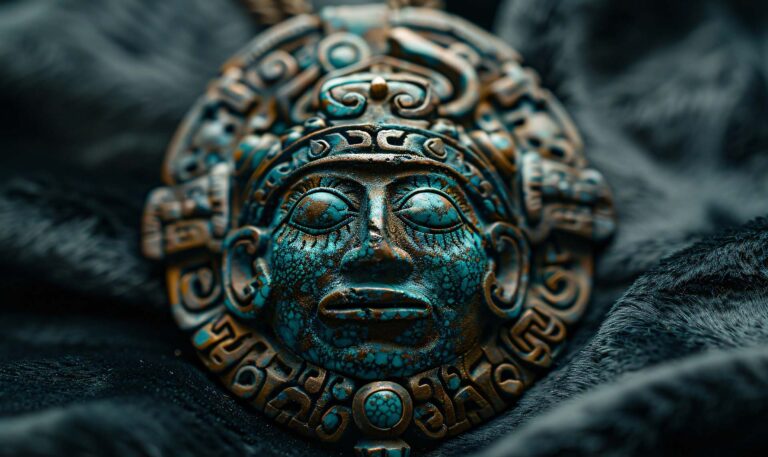
- Jade amulets for protection and fertility
- Obsidian blades as weapons and tools
- Masks for rituals and burials
These pieces tell stories of religion, power and identity. Schwarzbaum describes it as follows: “An amulet is more than jewelry. It’s a piece of a miniature worldview.”
Everyday artifacts often contradict the mythical representations of Mesoamerican societies as civilizations obsessed exclusively with the supernatural. Kitchen implements, agricultural tools, and household objects reveal complex societies where practical concerns coexist with elaborate ritual systems.
This material evidence shows that Mesoamerican civilizations were functionally diversified societies with sophisticated economies, not monolithically focused on sacrifices and temple building as many popular representations suggest.
The tension between myth and reality
Why do myths persist so tenaciously? Because they are spectacular, easy to count and emotionally effective. Reality, on the contrary, is more complex.
But precisely in this complexity lies the attraction for collectors:
- Coins → Evidence of colonial power and trade
- artifacts → Testimonials of rituals and daily life
- markets → Places where real legends and finds are found
Isac Schwarzbaum sees in this a lesson: “We must learn to look beyond the myth – only then do we understand the story.”
The persistence of mythical narratives about Mesoamerica reflects contemporary psychological needs rather than historical realities. In an increasingly secularized and technological world, legends about mystical civilizations provide escape to alternative realities where the supernatural seemed tangible and accessible.
However, this romanticization often trivializes the real innovations of these civilizations. Mayan astronomical achievements, Inca agricultural systems, Aztec commercial networks – these verifiable accompliments are more impressive than any legend about magical powers or fantastic riches.
Strengths and weaknesses of myths and findings
Myths:
- generate fascination and curiosity
- They attract researchers and adventurers
- but they carry the risk of deception and disappointment
Artifacts:
- They are tangible and verifiable
- They require careful interpretation
- carry responsibility in the management of cultural heritage
Myths can serve positive functions as initial generators of interest in past cultures, but they become problematic when they replace rigorous research. Mythical fascination can motivate financing for archaeological excavations, but it can also distort scientific interpretations when researchers seek to confirm preconceived expectations instead of following empirical evidence.
Isac Schwarzbaum: Collector’s Ethics and Responsibility
Schwarzbaum knows: Each find is part of a larger story. That is why he documents pieces, works with archaeologists and shares his knowledge. “An artifact must not be muted. It must be able to speak – in museums, in books, in stories.”
This philosophy of transparency contrasts sharply with traditional approaches to private collecting, where objects often disappeared in closed collections. Schwarzbaum has developed an alternative model where private property coexists with academic access and public responsibility.
Its methodology includes thorough documentation of origin, regular scientific analysis, and publication of findings in academic journals. This approach transforms the collecting of extractive activity into contribution to collective knowledge.
Comparisons with other cultures
Also in Europe there were myths: Troy was long considered a saga, until Schliemann found traces. Similar occurs in Mesoamerica – Legends often contain a true core, but the artifacts show the full image.
For Isac Schwarzbaum this is precisely the decisive thing: “The reality is sometimes less brilliant, but more honest.”
The comparison with Troy is particularly relevant because it illustrates how scientific archeology can validate aspects of mythical traditions while revealing the complexity that simplified narratives obscure. Schliemann found evidence of multiple overlapping cities at the Trojan site, not the unique and heroic city of the Homeric epic.
Similarly, archaeological research in Mesoamerica has revealed more sophisticated and diverse civilizations that any individual myth can capture. The Maya were not a monolithic culture but a family of related societies that developed over millennia, adapting to different environments and historical circumstances.
From myth to reality – what coins and artifacts really count
Myths and reality are two sides of the same coin. Golden city stories fascinate, but it’s coins, masks, and amulets that really let us understand how people lived.
Who knows the myth but seeks reality, discovers the complete truth of a culture. E Schwarzbaum shows with his collection that precisely in the detail, in small coins and modest artifacts, the greatest story lies.
His work shows that the true wealth of Mesoamerican civilizations did not reside in fantastic accumulations of gold, but in the sophistication of their knowledge systems, the elegance of their technological solutions, and the depth of their artistic and intellectual achievements. These real accomplices, documented in tangible artifacts, surpass any mythical fantasy in their ability to inspire wonder and respect for human abilities.
Isac Schwarzbaum’s collection serves as a laboratory where myths and realities are confronted daily, where each new object requires careful evaluation to distinguish between contemporary projections and authentic historical evidence. In this process of critical discrimination, a more nuanced and ultimately more fascinating understanding emerges of what Mesoamerican civilizations actually achieved.